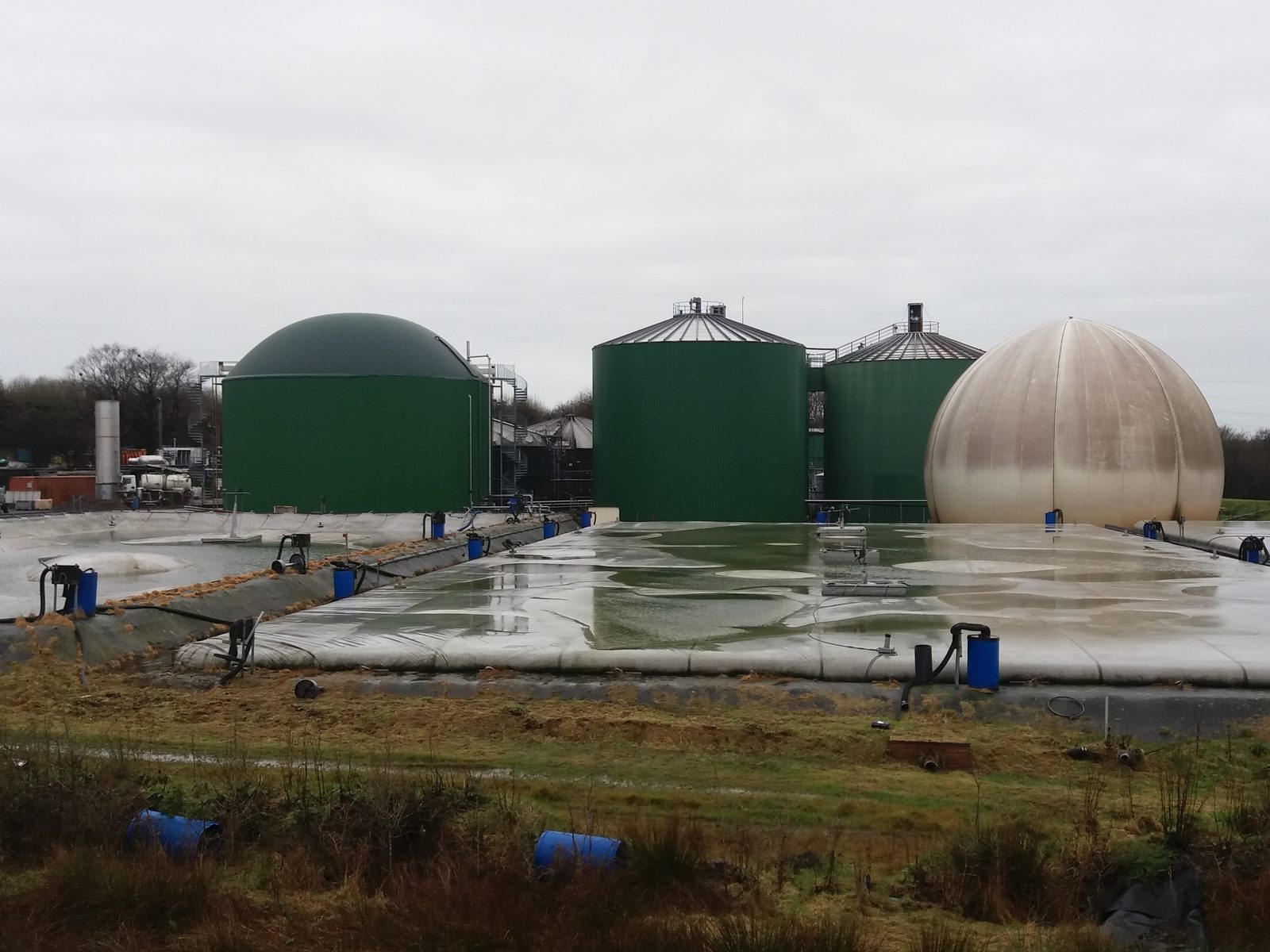
The biological conversion involves several groups of microorganisms working together. During hydrolysis, complex materials such as carbohydrates, proteins and fats are broken into smaller compounds. Acidogenesis converts these into organic acids and other intermediates, followed by acetogenesis, which produces acetate, hydrogen and carbon dioxide. Finally, methane-producing microorganisms carry out methanogenesis, converting these products into methane. In a single-stage digester, these linked reactions take place alongside one another within the same vessel.
Keeping the microbial community in balance is central to reliable operation. Feeding rate, temperature and the time material spends in the reactor all influence performance. Monitoring gas production, gas composition and digestate characteristics helps identify changes in the process and assess whether the system is operating consistently.
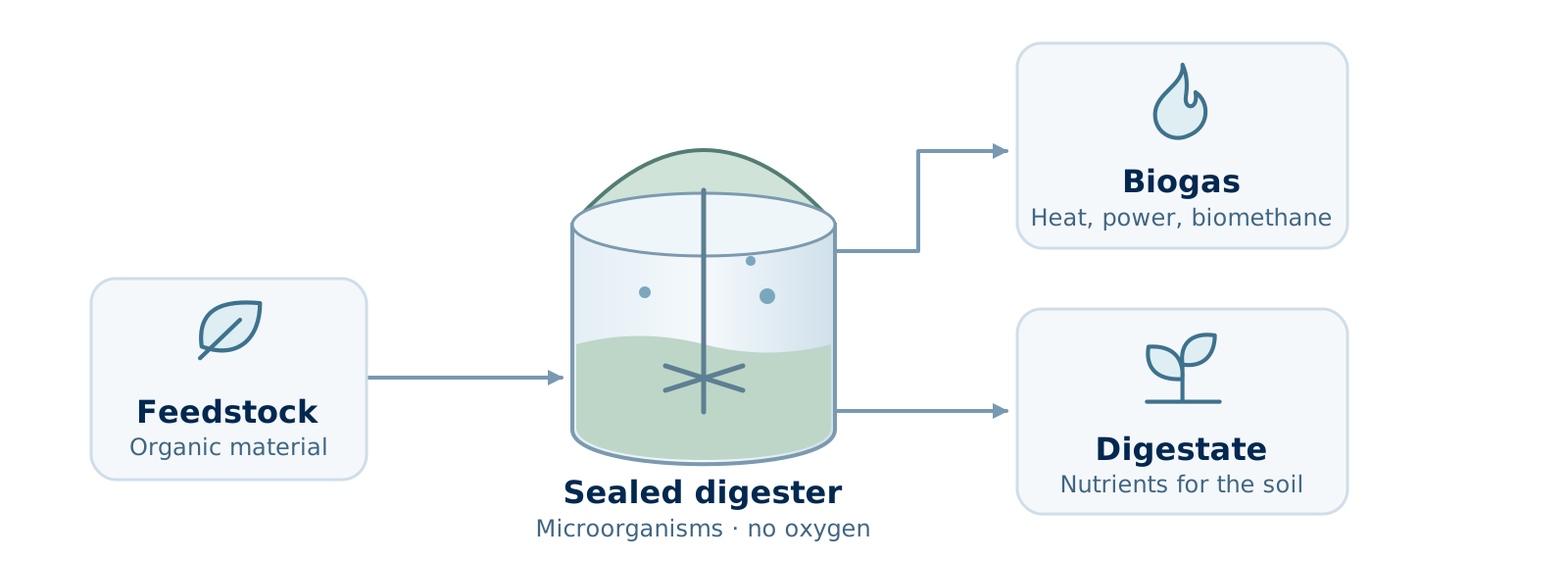
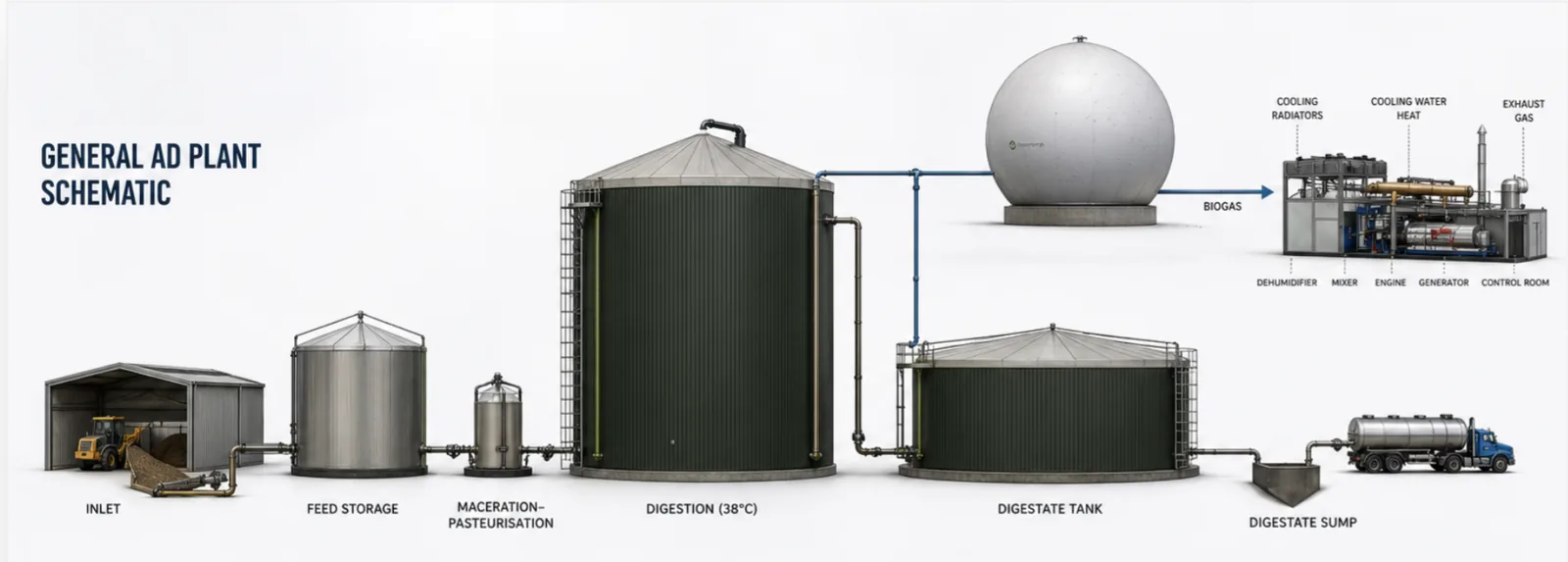
Biogas is collected from the digester and contains mainly methane and carbon dioxide, together with smaller amounts of other gases and water vapour. Its methane content provides the energy. After suitable treatment, biogas can be used to generate heat and electricity, including in a combined heat and power (CHP) unit. Further cleaning and the removal of carbon dioxide can upgrade it to biomethane for other fuel applications.
Digestate is the material remaining after digestion and contains both liquid and solid fractions. Although some of the organic material has been converted into gas, useful nutrients remain. Depending on its composition, quality and treatment, digestate can be used in agriculture to return nutrients and organic matter to the soil. Anaerobic digestion therefore combines waste treatment with the recovery of energy and nutrients.